Chasing Light in the Arctic: My Camera Fell in Love with Tromsø
Have you ever seen light dance across the sky in shades of green and purple? Tromsø, nestled in northern Norway, offers one of the most breathtaking visual spectacles on Earth—the Northern Lights. But this vibrant city is more than just a backdrop for photos; it’s a living, breathing winter wonderland where every moment feels surreal. From dog sledding under the midnight sun to capturing frozen fjords at golden hour, Tromsø turns travelers into storytellers—especially through the lens. Surrounded by snow-draped mountains and icy fjords, this Arctic gem blends natural drama with cultural warmth, inviting visitors to slow down, observe, and truly see the world anew. For those who carry a camera, Tromsø doesn’t just inspire—it transforms.
Why Tromsø? The Magic of Arctic Light and Landscape
Tromsø’s allure begins with its rare position within the auroral oval, the ring-shaped zone around the North Pole where auroras occur most frequently. Located over 350 kilometers north of the Arctic Circle, the city enjoys long, dark winters—ideal for spotting the Northern Lights—while remaining easily accessible by direct flights from major European cities. Unlike remote Arctic outposts, Tromsø combines frontier wilderness with urban comfort, making it a practical yet magical destination for travelers seeking authenticity without sacrificing safety or convenience.
The city’s natural canvas is shaped by dramatic contrasts: deep blue shadows on fresh snow, the soft glow of twilight lasting for hours, and the reflective surface of frozen fjords that double the impact of every ray of light. These conditions create what photographers call “natural HDR”—a dynamic range of light and color that enhances depth and texture in every frame. Whether shooting from the harbor, the hills above town, or a quiet forest clearing, the interplay of elements ensures that no two images look the same.
Yet Tromsø is not just a stage for nature’s show—it has a soul of its own. Its compact center is lined with colorful wooden houses painted in red, yellow, and deep green, standing like cheerful sentinels against the winter gray. At the heart of the city rises the Arctic Cathedral, a striking modern structure with triangular windows that flood the interior with northern light. Its clean lines and reflective surfaces make it a favorite subject for architectural photography, especially when dusted with snow and illuminated at night.
What sets Tromsø apart from other Arctic destinations is its year-round vibrancy. Even in the depths of winter, when the sun doesn’t rise for several weeks, the city pulses with life. Cafés buzz with conversation, students from the world’s northernmost university walk between classes, and cultural events fill the calendar. This blend of resilience and warmth makes Tromsø not just a place to visit, but a place to feel—deeply and genuinely connected to the rhythm of the far north.
The Northern Lights: More Than Just a Photo Opportunity
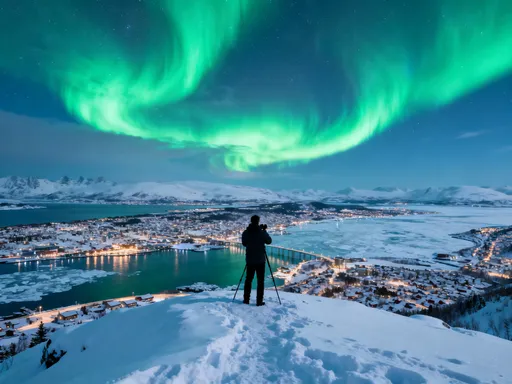
The Northern Lights, or aurora borealis, are more than a tourist attraction—they are a celestial phenomenon rooted in science and steeped in wonder. They occur when charged particles from the sun collide with Earth’s magnetic field, funneling energy toward the poles and igniting the upper atmosphere in shimmering waves of color. Most commonly seen in green, the auroras can also flare into violet, pink, and red, depending on altitude and atmospheric composition. In Tromsø, these lights are visible on average more than 200 nights a year, particularly from late September to early April, when darkness dominates the sky.
For travelers, seeing the auroras is often a once-in-a-lifetime experience—but capturing them well requires more than luck. The best viewing conditions include clear skies, low light pollution, and cold, dry air, which enhances visibility. While the city center offers some views, most photographers and tour operators recommend venturing just outside Tromsø, to spots like Kvaløya Island or the shores of Lake Laberg, where the horizon is unobstructed and the surroundings are quiet. Many guided tours include transportation, warm clothing, and expert commentary, making them ideal for first-time visitors.
Photographing the auroras successfully involves understanding a few basic principles. A tripod is essential—any camera shake during long exposures will blur the image. Using manual focus set to infinity ensures sharp stars and crisp light trails, while a wide-angle lens captures the full sweep of the sky. Exposure times typically range from 5 to 20 seconds, depending on the brightness of the auroras and the aperture setting. ISO levels between 800 and 3200 help capture detail without excessive noise. But beyond technical settings, the most important ingredient is patience. The lights often appear without warning, dance for a few minutes, then vanish—only to return later in the night.
Many travelers become so focused on getting the perfect shot that they forget to simply watch. Yet the most powerful memories often come from moments when the camera is lowered, and the eyes take over. There’s a quiet awe in standing beneath a sky that pulses with energy, in feeling small beneath something vast and ancient. That emotional connection—the sense of being present in a rare and fleeting moment—is what transforms a photograph from a picture into a story.
Dog Sledding Through Silent Wilderness: Adventure with a View
Dog sledding in Tromsø is not just a thrilling Arctic activity—it’s a moving photo studio on ice. As the huskies bark with anticipation and the sled lurches forward, the world shifts into a new rhythm. The only sounds are the crunch of snow under runners, the panting of the dogs, and the wind whispering through pine branches. The landscape unfolds in silence, broken only by the occasional call of the musher. For photographers, this journey offers a dynamic mix of motion, emotion, and natural beauty that’s hard to replicate anywhere else.
The experience itself is deeply immersive. Bundled in thermal suits and mittens, travelers glide across frozen lakes and through snow-laden forests, surrounded by mountains that rise like sentinels in the pale light. The dogs—typically Alaskan huskies or Siberian malamutes—are energetic and well-trained, their breath forming clouds in the cold air. Their expressions, from focused determination to joyful playfulness, make for compelling close-ups. Capturing the bond between musher and team, the tension in the harness lines, and the blur of movement against a static background can result in powerful, story-rich images.
From a photography standpoint, dog sledding presents unique challenges and opportunities. The motion requires faster shutter speeds to freeze action, while low light conditions call for higher ISO settings. Using continuous shooting mode allows for capturing sequences—such as a dog mid-leap or a sled turning a corner—that convey energy and narrative. Wide shots that include the surrounding landscape help establish context, showing how small the sled is against the vastness of the Arctic wilderness.
Equally important is the ethical dimension of dog sledding. Reputable operators in Tromsø prioritize animal welfare, ensuring that dogs are healthy, well-fed, and rested between runs. Many offer pre- or post-sled visits to the kennel, where travelers can meet the animals and learn about their care. These moments provide authentic, heartwarming photo opportunities—children petting puppies, mushers checking harnesses, dogs napping in straw-lined shelters. When tourism respects both nature and its participants, the resulting images carry a deeper truth.
Practical considerations also matter. Cold temperatures drain camera batteries quickly, so carrying spares in an inner pocket—close to body heat—is essential. A waterproof cover protects the camera from snow and condensation, especially when moving between warm indoor spaces and the freezing outdoors. And while it’s tempting to shoot nonstop, taking time to simply ride, breathe, and absorb the experience often leads to more meaningful photographs later.
Fjords, Mountains, and Midnight Sun: Landscape Photography Beyond the City
While Tromsø’s urban scenery is captivating, the true heart of its visual power lies beyond the city limits. The surrounding region is a tapestry of fjords, glaciers, and peaks, shaped by ice and time. Boat tours to nearby islands like Sommarøy or Senja offer panoramic views of sheer cliffs plunging into turquoise waters, while hiking trails lead to alpine plateaus with 360-degree vistas. These excursions are not just adventures—they are masterclasses in landscape photography, where light, water, and rock combine to create images of timeless beauty.
One of the most popular destinations is Fløvatnet, a high-altitude lake accessible via a moderate hike from the Fløya cable car station. In winter, the lake freezes solid, its surface cracked and textured like ancient glass. When the sun skims the horizon, the ice glows with a soft blue hue, reflecting the surrounding peaks. Early morning visits offer the best light—diffused and golden—while minimizing footprints on the snow. For photographers, the scene provides endless compositional possibilities: leading lines across the ice, reflections of clouds, or a lone tree standing at the water’s edge.
Another favorite is Storsteinen, reachable via the Fjellheisen cable car. At over 400 meters above sea level, the viewing platform offers a sweeping panorama of Tromsø, the strait, and the Lyngen Alps in the distance. In winter, the low sun casts long shadows across the snow, creating dramatic contrasts between light and dark. Photographers can use the rule of thirds to balance the cityscape with the natural backdrop, or zoom in on details like frost-covered railings or footprints in fresh powder.
For those willing to travel farther, multi-day tours to the Lyngen Peninsula or Lofoten Islands provide even more dramatic scenery. These regions are known for jagged peaks rising directly from the sea, fishing villages perched on rocky shores, and skies that blaze with color at dawn and dusk. Many guided tours are designed with photographers in mind, scheduling stops at golden hour and providing transportation to remote locations. Some even include overnight stays in glass-roofed cabins, where the Northern Lights can be watched from bed—ideal for time-lapse photography.
The key to successful landscape photography in this region is timing. Light changes rapidly in the Arctic, and the golden hours—just after sunrise and before sunset—are often the most productive. Because the sun remains low in the sky, even at midday, shadows are elongated, and textures are emphasized. Overcast days, often seen as a setback, can actually enhance images by providing soft, even lighting that reduces harsh contrasts. Understanding these patterns allows photographers to plan shoots that maximize both beauty and technical quality.
Urban Vibes and Local Culture: Capturing Life in the Arctic Circle
While nature dominates the imagination of Tromsø, the city’s human side is equally photogenic. Life here moves at a deliberate pace, shaped by the seasons and the demands of the far north. Locals dress in functional yet stylish winter wear—wool hats, fur-lined boots, and colorful knitwear—that stand out vividly against snowy backdrops. Street scenes in the city center, especially around Storgata and the harbor, offer rich opportunities for candid photography that captures the spirit of Arctic living.
Cafés play a central role in daily life, serving as warm refuges where people gather to drink coffee, read, or chat. Steam rises from mugs, windows fog with warmth, and the scent of cinnamon buns fills the air. These interiors make for intimate, cozy images—hands wrapped around a cup, a book open on a wooden table, light filtering through a frosted pane. With permission, photographing café life can reveal the quiet joy of simple moments, a contrast to the grandeur of the outdoors.
The Polar Museum, housed in a historic wooden building near the harbor, offers insight into Tromsø’s seafaring past. Exhibits detail Arctic expeditions, whaling history, and the legacy of explorers like Roald Amundsen. The dim lighting and vintage artifacts create a nostalgic atmosphere, perfect for moody, atmospheric shots. Nearby, local art galleries showcase contemporary Nordic artists, often featuring themes of light, isolation, and nature. These spaces provide a cultural counterpoint to the wilderness, reminding visitors that human creativity thrives even in extreme conditions.
Winter festivals add another layer of vibrancy. The Tromsø International Film Festival, held each January, draws filmmakers and audiences from around the world. The streets come alive with posters, red carpets, and bustling cinemas, offering colorful, energetic scenes for street photography. Other events, like the Arctic Cathedral’s candlelight concerts or the Sami Easter Festival, celebrate local traditions with music, dance, and traditional dress. These moments are fleeting but powerful, capturing the resilience and richness of Arctic culture.
When photographing people, respect is paramount. A smile, a nod, or a simple gesture can go a long way in gaining trust. Many locals are accustomed to tourists and are happy to be photographed, especially if asked politely. The best urban images often emerge from genuine interaction—sharing a laugh, accepting an invitation for coffee, or simply walking quietly through a neighborhood at dusk. These connections, though brief, add emotional depth to a visual journey.
Practical Tips for Travelers Who Want to Shoot Like a Pro (Without Being One)
Traveling to Tromsø with a camera doesn’t require professional gear or years of experience—just preparation and presence. The Arctic environment is beautiful but demanding, and a few smart choices can make the difference between a successful trip and a frustrating one. First and foremost is clothing: dressing in layers is essential. A moisture-wicking base layer, an insulating middle layer, and a windproof, waterproof outer shell help maintain body heat while allowing flexibility. Mittens are warmer than gloves, and hand warmers can be lifesavers during long nights of aurora hunting.
Camera gear needs special care in the cold. Sudden temperature changes can cause condensation, which may damage electronics. To prevent this, store the camera in a sealed plastic bag when moving indoors, allowing it to warm up slowly. Batteries lose power quickly in freezing temperatures, so carrying at least two spares—and keeping them warm in an inner pocket—is crucial. A small microfiber cloth helps wipe away snow or frost from lenses without scratching.
For those who don’t own high-end equipment, renting gear in Tromsø is a practical option. Several local shops offer DSLR and mirrorless camera rentals, along with tripods, lenses, and protective cases. This allows travelers to test professional tools without the investment. Many rental services also provide brief tutorials, helping beginners understand basic settings for low-light photography.
Technology can be a valuable ally. Apps like My Aurora Forecast & Alerts, Windy, and PhotoPills help track aurora activity, cloud cover, and sun position. Checking these daily allows for better planning and increases the chances of being in the right place at the right time. However, it’s equally important to disconnect occasionally. Some of the most memorable moments happen when the camera is put away—watching the lights with a loved one, sipping hot chocolate after a hike, or simply standing still in the snow, listening to silence.
The best photographs often come not from technical perfection, but from emotional truth. A slightly blurred image of a child’s face lit by aurora glow, a candid laugh during a dog sledding ride, or the reflection of a streetlamp in a frozen puddle—these are the moments that endure. Photography in Tromsø is not about capturing everything, but about choosing what matters.
Why This Journey Stays With You—Long After the Memory Card Is Full
Tromsø leaves a lasting impression not because of how it looks, but because of how it makes people feel. The journey to this Arctic city is more than a vacation—it is an invitation to slow down, to pay attention, to witness beauty in its most elemental forms. The Northern Lights remind us of forces beyond our control, the vastness of the universe, and the fragility of our place within it. The silence of the snow-covered wilderness teaches stillness. The warmth of a local café restores the spirit.
For photographers, Tromsø transforms the act of taking pictures into a practice of mindfulness. Framing a shot requires observation: noticing the angle of light, the texture of ice, the expression on a face. It demands patience—waiting for the auroras to appear, for the dogs to leap in unison, for the sun to crest a mountain. In a world that often feels rushed and fragmented, this deliberate attention becomes a form of healing.
But the most enduring images are not always the sharpest or most colorful. They are the ones tied to memory—the cold sting of wind on cheeks, the sound of huskies howling at dusk, the shared silence of a family watching the sky ignite. These moments, captured or not, become part of who we are. They remind us that travel is not about collecting destinations, but about deepening connection—to nature, to others, to ourselves.
Tromsø does not offer easy answers or quick thrills. It offers something rarer: stillness, wonder, and the chance to see the world anew. Whether through a lens or with the naked eye, the experience lingers. Long after the photos are shared and the albums closed, the light remains—not just in pixels, but in the heart.