Lost in the Arctic Charm: Where Lofoten’s Local Markets Steal Your Heart
Nestled above the Arctic Circle, the Lofoten Islands aren’t just a paradise of jagged peaks and northern lights—they’re a haven for authentic, soulful shopping. Forget glossy malls; here, every wool sweater, hand-carved knife, and dried fish tells a story. I wandered from tiny fishing villages to art-filled studios, discovering how local crafts blend with daily life in the most beautiful ways. This is not tourism as spectacle, but as connection—where markets are not transactional spaces, but living rooms of community life. In Lofoten, shopping becomes storytelling, and every purchase carries the weight of tradition, the warmth of craftsmanship, and the quiet pride of people who live in harmony with one of Earth’s most dramatic landscapes.
The Rhythm of Lofoten: More Than Just a Postcard Landscape
The Lofoten Islands rise dramatically from the Norwegian Sea, a chain of mountainous islands strung like pearls above the 67th parallel. Here, the land does not yield easily. Steep granite peaks plunge into icy fjords, and the seasons swing from the endless daylight of summer to the deep, hushed nights of winter. Yet, this rugged terrain has nurtured a way of life defined not by hardship, but by harmony. For centuries, the people of Lofoten have lived in rhythm with the sea, their survival tied to the annual migration of cod and the resilience of their coastal communities. This deep-rooted connection to nature shapes everything—including how they shop, sell, and share.
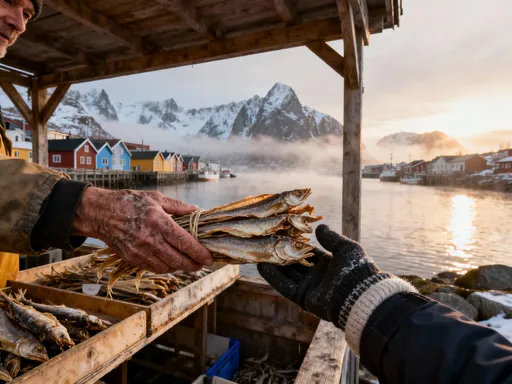
What makes Lofoten unique is that commerce here is not separated from culture. There are no tourist traps selling mass-produced trinkets. Instead, shopping happens in converted boathouses, village halls, and harbor stalls where goods are made by hand and priced with honesty. The rhythm of daily life—fishing, knitting, carving, preserving—flows seamlessly into the marketplace. Visitors don’t just buy souvenirs; they witness traditions in motion. A fisherman might hand you a piece of dried cod while explaining how it’s been prepared for generations. A weaver might invite you into her studio to show how wool is spun from local sheep. These moments are not performances; they are simply life as it’s lived.
The natural beauty of Lofoten enhances this authenticity. Imagine standing in a small wooden market in the village of Å, surrounded by red rorbuer cabins, with snow-dusted peaks in the distance and the sound of waves lapping against the shore. The air carries the scent of salt and smoked fish. This is not a curated experience—it is the real thing. And in this setting, shopping becomes an act of respect, a way to honor the time, skill, and care that go into every locally made item. The landscape itself teaches mindfulness, urging visitors to slow down, observe, and appreciate.
From Fishermen’s Cabins to Craft Studios: The Soul of Local Commerce
One of the most striking transformations in Lofoten is how old fishing infrastructure has been repurposed into creative spaces. Former boathouses, once used for storing nets and drying fish, now serve as art galleries, textile workshops, and design studios. These spaces retain their original charm—weathered wood, low ceilings, and sea views—while housing the next generation of Nordic craftsmanship. This evolution reflects a broader shift in the local economy: from one based solely on survival to one that values creativity, sustainability, and cultural preservation.
In villages like Reine and Hamnøy, you’ll find artisans turning everyday materials into works of art. Woodworkers craft kitchenware from driftwood, their tools shaped by hand and finished with natural oils. Textile artists use traditional patterns to create scarves, blankets, and mittens, each piece dyed with plant-based colors and knitted with care. These crafts are not made for novelty; they are rooted in necessity. In the past, every family needed warm clothing, durable tools, and preserved food to survive the long winters. Today, those same skills are celebrated not just for their utility, but for their beauty and heritage.
The shift from fishing to craft-based commerce has also empowered local women, many of whom lead textile cooperatives and design houses. In Kabelvåg, for example, women have revived the art of Lofoten wool production, combining ancient techniques with modern design. Their work is not only economically sustainable but culturally vital, ensuring that knowledge passed down through generations does not disappear. When you buy a hand-knitted sweater or a carved wooden spoon, you’re not just acquiring an object—you’re supporting a living tradition, one that continues to evolve while staying true to its roots.
Svinøya Rorbuer and the Heartbeat of Svolvær’s Harbor Market
Svolvær, the largest town in the Lofoten archipelago, serves as a cultural and commercial hub. At its center lies the bustling harbor market, a vibrant mix of fresh produce, handmade goods, and local art. The market pulses with energy, especially during the summer months when fishing boats return with their daily catch and visitors pour in from hiking trails and cruise ships. But even in winter, when the streets are quiet and snow blankets the rooftops, the market remains a place of warmth and connection.
One of the most iconic spots in Svolvær is Svinøya Rorbuer, a row of restored fishermen’s cabins that now house small shops and cafes. Here, you can sip on locally roasted coffee while browsing hand-carved knives, woolen socks, and framed photographs of the northern lights. The scent of drying cod—known as stockfish—hangs in the air, a reminder of the region’s culinary heritage. Fishermen still hang their catch on wooden racks called hjell, where the cold wind and salt air naturally preserve the fish over several weeks. This method, unchanged for centuries, is a point of pride and a key part of the local economy.
The market also showcases the work of independent artists and designers. Paintings of stormy seas and mountain silhouettes line the walls of small galleries, while jewelry makers display pieces inspired by Viking motifs and Arctic wildlife. Many vendors are the creators themselves, happy to explain their process and share stories behind their work. A knitter might tell you how her grandmother taught her to use the star pattern, a symbol of guidance in Norse tradition. A woodcarver might show you how he sources his timber from fallen trees, ensuring no harm to the forest. These conversations transform shopping from a transaction into a shared moment of understanding.
Nusfjord: A Hidden Village with Timeless Treasures
Far from the mainland and accessible only by a single tunnel, Nusfjord is one of Norway’s best-preserved fishing villages. Designated as a protected heritage site, the village has retained its 18th-century character, with red wooden buildings perched on stilts above the water. At the heart of Nusfjord stands the old trading post, a simple wooden structure that once served as the economic lifeline for the community. Today, it functions as a small museum and shop, offering visitors a glimpse into the past while supporting the present.
The shop at the Nusfjord trading post sells a carefully curated selection of local goods: smoked salmon, dried cod, hand-knit woolens, and handmade soaps infused with Arctic herbs. Nothing feels commercialized. Prices are fair, and the staff—often locals with deep family ties to the village—speak with quiet pride about what they offer. You won’t find plastic souvenirs or imported goods. Instead, every item reflects the environment and history of the place. A jar of lingonberry jam comes from berries picked in the nearby hills. A woolen hat was knitted by a woman who grew up in one of the rorbuer cabins.
Shopping in Nusfjord feels like stepping into a slower, more intentional world. There is no rush, no pressure to buy. Visitors are encouraged to linger, to ask questions, to sit by the window and watch the boats rock gently in the harbor. Children play on the docks, and elders sit outside the small café, sipping tea and exchanging stories. In this setting, commerce is not separate from community—it is woven into its fabric. When you purchase something here, you’re not just taking home a souvenir; you’re carrying a piece of a way of life that values simplicity, sustainability, and human connection.
Kabelvåg and the Revival of Vesterålen Wool
Kabelvåg, one of the oldest settlements in Lofoten, has long been a center for textile production. Its history as a wool-processing town dates back to the 19th century, when large-scale knitting operations supplied fishermen with warm, water-resistant clothing. Today, that legacy lives on in a renewed appreciation for Lofoten wool—soft, durable, and naturally insulating, thanks to the hardy sheep that graze on the islands’ rocky pastures.
The white Lofoten sheep, adapted to the harsh climate, produce wool with unique properties. It is rich in lanolin, making it naturally water-resistant and ideal for outdoor wear. Local brands like LL of Lofoten and Lofoten Garn have modernized traditional knitting techniques, creating stylish yet functional garments that appeal to both locals and visitors. Their designs often feature the selbuvott pattern or geometric motifs inspired by Sami and Norse art, blending heritage with contemporary fashion.
In Kabelvåg, small boutiques invite travelers to explore this textile renaissance. You can watch artisans at work, try on hand-knit sweaters, and even participate in workshops to learn basic knitting skills. These shops are more than retail spaces—they are educational hubs, preserving knowledge that might otherwise fade. Many of the knitters are older women who learned the craft from their mothers and grandmothers. By supporting these businesses, visitors help ensure that this skill continues to be passed down.
Buying wool in Kabelvåg is also an ethical choice. Most producers prioritize sustainability, sourcing wool from local farms that practice humane animal husbandry. Dyes are plant-based, and packaging is minimal. When you wear a sweater from Lofoten, you’re not just staying warm—you’re wearing a story of resilience, craftsmanship, and environmental respect.
Artist Ateliers in Henningsvær: Where Creativity Meets the Sea
Henningsvær, often called the “St. Tropez of the North,” is a cluster of tiny islands connected by small bridges. Despite its modest size, it has become a magnet for artists drawn to its dramatic light, rugged beauty, and sense of isolation. Galleries and studios are tucked into old buildings, hidden between a football field and a cliffside path. There’s no central art district—instead, creativity spills organically into the village, making discovery part of the experience.
Many artists in Henningsvær work in mediums shaped by their environment. Painters capture the ever-changing light on the water, using deep blues and grays to convey the mood of the Arctic Sea. Ceramicists craft bowls and vases from local clay, their textures mimicking the roughness of stone and ice. Jewelry makers use silver and recycled materials to create pieces inspired by waves, birds, and ancient runes. What unites them is a deep reverence for place—a belief that art should reflect, not dominate, the natural world.
Visitors are welcome to step into these ateliers, where artists often work behind glass walls or in open studios. Some offer guided tours, explaining their inspiration and techniques. Others simply invite you to browse, with price tags written in neat handwriting and notes about the materials used. Buying art here feels personal, like receiving a gift from someone who truly loves where they live. A small painting might depict the view from their studio window at dawn. A silver pendant might be modeled after a puffin’s wing. These are not mass-produced items; they are intimate expressions of life in Lofoten.
Shopping with Purpose: How Every Purchase Supports the Community
In remote regions like Lofoten, every purchase has impact. Unlike in cities where tourism dollars often flow to large corporations, here they go directly to families, artisans, and small businesses. When you buy a hand-knitted mitten from a local weaver, you’re helping her afford materials for the next batch. When you pay for a piece of smoked salmon at a family-run smokehouse, you’re supporting a tradition that has fed communities for generations. This direct economic link makes conscious shopping not just a nice idea, but a meaningful act.
Travelers can support this ecosystem by choosing authenticity over convenience. Look for signs that say “handmade in Lofoten” or “locally produced.” Ask vendors about their process—where the materials come from, how long an item took to make, whether it’s part of a family tradition. These conversations not only deepen your appreciation but also affirm the value of the work. Avoid stores that sell imported goods labeled as “Norwegian style”—these often undercut local producers and dilute cultural authenticity.
Respectful engagement also means understanding the pace of life here. Service may be slower, hours may be limited, and choices may be fewer. This is not inefficiency—it’s intentionality. People in Lofoten live deliberately, and their commerce reflects that. By slowing down and embracing the rhythm of the place, visitors become part of the community, even if only for a day. Responsible shopping, then, is not just about what you buy, but how you approach the experience—with curiosity, humility, and gratitude.
Conclusion: Carrying Lofoten Home, One Thoughtful Find at a Time
The true magic of shopping in Lofoten lies not in the items themselves, but in the stories they carry. A wool sweater is more than warmth—it is the labor of a shepherd, the skill of a knitter, the legacy of a people who have learned to thrive in extreme conditions. A jar of smoked fish is not just food—it is the knowledge of generations, the rhythm of the tides, the patience of slow preservation. These objects are vessels of memory, connecting us to places and people we may never see again, yet whose lives have touched ours.
As travelers, we have a choice: to consume mindlessly or to engage meaningfully. In Lofoten, the latter is not only possible—it is encouraged. The markets here do not sell experiences; they invite you into them. They remind us that commerce can be kind, that beauty can be useful, and that tradition can evolve without losing its soul. When you return home with a hand-carved knife or a painting of the northern lights, you’re not just bringing back a souvenir. You’re carrying a piece of a culture that values slowness, sustainability, and human connection.
May your travels lead you to places where shopping is not a chore, but a conversation. Where every object has a name, a maker, a story. Where the sea still shapes the economy, and the mountains still inspire the art. And may you, like so many before you, find that the most lasting souvenirs are not the ones you pack in your suitcase—but the ones that stay in your heart.