You Won’t Believe These Hidden Gems in Yosemite
Yosemite National Park is more than towering cliffs and thundering waterfalls—its secret architecture tells a story few travelers ever notice. Nestled in the shadows of giant sequoias and granite peaks, historic lodges and rustic structures blend seamlessly with nature. I stumbled upon these hidden wonders during a quiet morning hike, and what I found changed how I see the park forever. This is not just about buildings—it’s about legacy, design, and the quiet beauty most people walk right past. These structures, often overlooked, were built with intention, humility, and deep respect for the landscape. They are not intrusions but invitations—invitations to slow down, observe, and appreciate the harmony between human craftsmanship and natural grandeur.
The Forgotten Heart of Yosemite: Introducing Its Architectural Secrets
When most visitors think of Yosemite, they picture Half Dome at sunrise or Bridalveil Fall roaring in spring runoff. Yet beneath the grandeur of rock and water lies a quieter narrative—one told through stone foundations, hand-hewn beams, and carefully placed windows that frame the wilderness like living paintings. These are Yosemite’s architectural secrets: buildings designed not to stand out, but to belong. From grand hotels to humble ranger cabins, each structure was conceived under the National Park Service’s early 20th-century Rustic Design philosophy, which insisted that man-made elements should complement, not compete with, the natural world.
This design ethic emerged in the 1910s and matured in the 1920s and 1930s, a response to growing concerns that modern development might mar the sanctity of America’s wild places. Architects were tasked with creating functional spaces that felt as though they had grown from the earth itself. They used local materials—granite quarried on-site, timber felled from nearby forests, and slate gathered from mountain slopes. Roofs were pitched to shed snow, eaves extended to protect from rain, and chimneys rose like natural outcroppings. The result was a built environment that did not announce itself but instead whispered its presence, inviting closer inspection.
Today, these structures remain integral to Yosemite’s identity. They are not relics frozen in time, but living parts of the park’s daily rhythm. Visitors sleep in them, gather in them, and seek shelter in them. Their survival is a testament to thoughtful planning and enduring craftsmanship. Yet many pass by without noticing. A family picnicking near a trailhead may not realize the stone comfort station beside them was built by Civilian Conservation Corps workers in 1935. A hiker pausing at a vista may not see that the ranger station perched on the ridge follows the same design principles as the grandest lodge in the valley. These buildings are easy to miss, but once seen, they deepen one’s connection to the park in unexpected ways.
Ahwahnee’s Grandeur: Where Luxury Meets Wilderness
Rising from the forest floor like a mountain chateau, The Ahwahnee stands as one of the most remarkable examples of park architecture in the United States. Completed in 1927, this grand lodge was envisioned as a place where wilderness and elegance could coexist. From the moment visitors step into its great hall, they are enveloped by a sense of awe—not just for the surrounding cliffs, but for the building itself. Towering windows frame views of Glacier Point and Half Dome, while massive stone fireplaces radiate warmth in the cool mountain air. The interior features handcrafted oak beams, woven Native American textiles, and intricate stonework that echoes the geology outside.
The Ahwahnee was designed by architect Gilbert Stanley Underwood, who sought to create a structure that honored both the scale of Yosemite and the comfort of its guests. Every material was chosen for its authenticity and durability. The floor tiles were hand-painted in California, the chandeliers crafted from antlers and iron, and the furniture custom-built to reflect a blend of Arts and Crafts, Native American, and Art Deco influences. Even the acoustics were considered: the great dining room was engineered to carry music and conversation without echo, making it a favorite venue for performances and gatherings.
What sets The Ahwahnee apart is not just its beauty, but its purpose. It was never meant to be a mere hotel. From its earliest days, it hosted presidents, royalty, and dignitaries, including Franklin D. Roosevelt, Queen Elizabeth II, and Nelson Mandela. Yet it has always remained accessible to the public, offering a rare opportunity to experience luxury in the heart of the wild. Its preservation has been a priority for the National Park Service, with meticulous restorations ensuring that original details are maintained. In 2015, after a legal dispute over naming rights, it was officially restored to its historic name, reaffirming its cultural significance.
Staying at The Ahwahnee is more than a vacation—it is an immersion in history and design. Guests wake to sunlight filtering through tall windows, dine beneath hand-beamed ceilings, and walk hallways lined with historic photographs. The lodge does not overpower the landscape; it enhances it, offering a human counterpoint to the sublime. It reminds us that comfort and reverence for nature are not opposites, but allies in the art of meaningful travel.
Wawona Hotel: Stepping Back into Victorian Comfort
While the valley draws the crowds, the quieter corners of Yosemite hold their own treasures—none more charming than the Wawona Hotel. Tucked into a forested meadow near the southern entrance of the park, this 19th-century retreat offers a glimpse into a gentler era of travel. Built in 1876, the hotel began as a stagecoach stop for early visitors making the long journey into the park. With its wide verandas, white clapboard siding, and gently creaking floorboards, it feels like a page lifted from a Victorian novel. Rocking chairs line the porches, inviting guests to sit, sip tea, and watch the light shift across the meadow.
Wawona’s location is one of its greatest assets. It sits just a short walk from the Mariposa Grove of Giant Sequoias, home to over 500 mature ancient trees, including the famed Grizzly Giant. Unlike the bustling valley, Wawona remains serene, with the sound of wind through pines replacing the hum of shuttle buses. The hotel itself has changed little over the decades. Antique furnishings, floral wallpaper, and oil lamps preserve its historic character. Each of the 104 rooms is unique, with no two layouts exactly alike, a reflection of the organic way the building expanded over time.
The preservation of Wawona Hotel is a story of dedication. In the 1970s, it faced the threat of demolition due to declining use and maintenance costs. Thanks to advocacy from preservation groups and the National Park Service, it was added to the National Register of Historic Places and underwent extensive restoration. Today, it operates seasonally, welcoming visitors who seek a slower, more reflective experience. Staying here feels less like checking into a hotel and more like being welcomed into a well-loved family home.
What makes Wawona special is not just its history, but its atmosphere. Children play croquet on the lawn, couples stroll beneath towering trees, and photographers capture the golden light of sunset on the veranda. It offers a different pace, one that encourages connection—to the past, to nature, and to each other. In a park often experienced through quick snapshots and crowded overlooks, Wawona reminds us that some of the most meaningful moments happen when we simply sit still and let the world unfold.
Yosemite’s Rustic Cabins: Simplicity Designed with Purpose
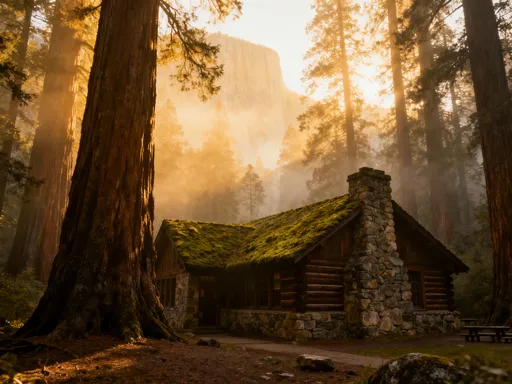
Beyond the well-known lodges lie dozens of smaller structures that form the quiet backbone of Yosemite’s infrastructure. Ranger stations, comfort stations, employee housing, and maintenance buildings dot the park, often unnoticed by passing visitors. Yet these humble cabins are masterpieces of functional design. Built in the park rustic style, they use native stone, peeled logs, and steeply pitched roofs to blend into their surroundings. Their exteriors are unadorned, their footprints small, their presence discreet. But within their modest walls lies a deep philosophy: that even the most utilitarian spaces can be designed with care and dignity.
Take, for example, the ranger stations scattered along popular trails. Many were constructed in the 1920s and 1930s using granite quarried nearby and timber harvested from fallen trees. Their thick walls provide insulation against winter cold, while large windows allow rangers to monitor trail activity. Inside, the layout is simple—a desk, a radio, a map-laden wall—but the craftsmanship is evident in every detail, from dovetailed corners to hand-forged hinges. These are not temporary outposts; they are permanent fixtures, built to last.
Similarly, the park’s comfort stations—public restrooms—are often architectural gems in their own right. Constructed with the same materials and attention as the grand lodges, they feature stone foundations, wooden doors with iron latches, and roofs that mimic the slope of the land. Their placement is strategic, ensuring privacy and minimal environmental impact. Even these functional spaces were designed to be beautiful, a reflection of the belief that every part of the visitor experience matters.
The employee housing units, though less visible to the public, follow the same principles. Built to house park staff during the busy season, they are modest in size but rich in character. Many are clustered in quiet groves, surrounded by trees and connected by footpaths. They lack modern luxuries, but they offer something rarer: a sense of place. Living in these cabins, staff members become part of the park’s rhythm, waking to bird calls and retiring under star-filled skies. These buildings, though uncelebrated, are essential to Yosemite’s operation and spirit.
The Role of the Civilian Conservation Corps: Builders of Beauty
No discussion of Yosemite’s architecture is complete without acknowledging the Civilian Conservation Corps, or CCC. During the Great Depression, from 1933 to 1942, this New Deal program brought thousands of young men to national parks across the country, including Yosemite. With shovels, picks, and sheer determination, they built trails, planted trees, fought fires, and constructed buildings that remain in use today. Their legacy is not just in the infrastructure they left behind, but in the standard of craftsmanship they set.
In Yosemite, CCC crews worked in all seasons, often in harsh conditions. They quarried stone, laid foundations, and hand-cut timbers for bridges, shelters, and service buildings. Many of the park’s most beloved trails—including parts of the Mist Trail and the route to Vernal Fall—were shaped by their labor. They built retaining walls that still hold back soil, footbridges that span rushing creeks, and fire lookouts that crown remote ridges. Their work was practical, but never rushed or careless. Every stone was placed with intention, every beam fitted with precision.
What made the CCC so effective was not just their labor, but their training. Enrollees received instruction in conservation, masonry, carpentry, and landscaping. They learned to work with the land, not against it. Their buildings followed the contours of the terrain, used local materials, and minimized disruption to vegetation. The result was a network of structures that felt organic, as if they had always been there. Today, many of these buildings are over 80 years old and still fully functional, a testament to their quality.
The CCC also fostered a culture of stewardship. Many enrollees developed a lifelong love for the outdoors, going on to careers in forestry, park management, and conservation. Their time in Yosemite was not just a job; it was a transformation. By building with their hands, they formed a deep connection to the land. That spirit lives on in every well-maintained trail and sturdy stone wall, reminding us that beauty and utility can coexist when guided by respect and care.
How to Find These Hidden Structures: A Traveler’s Guide
Discovering Yosemite’s architectural treasures requires a shift in perspective. Instead of rushing to the next overlook, try slowing down and looking closer. Many of the park’s most interesting buildings are not marked with grand signs or crowded tour groups. They reveal themselves to those who wander quietly, arrive early, and pay attention. A morning hike on the lower Yosemite Falls trail, for example, offers not just views of the waterfall, but a chance to admire the stone bridges and railings built by the CCC. Similarly, a walk through the Mariposa Grove leads past historic fencing and trailside shelters that speak to decades of thoughtful design.
One of the best ways to uncover these hidden gems is to take a guided history walk. Rangers and park volunteers often lead tours focused on Yosemite’s built environment, sharing stories about the Ahwahnee’s construction, the Wawona Hotel’s past, and the CCC’s contributions. These walks provide context and access to areas visitors might otherwise overlook. The LeConte Memorial Lodge, a small stone building near Happy Isles, is frequently included in such tours. Built in 1904 as a naturalist’s center, it now serves as a park information hub and a quiet place for reflection.
Another strategy is to explore the park’s lesser-visited areas. The Crane Flat region, located between Yosemite Valley and Tuolumne Meadows, is home to several CCC-built structures, including a fire lookout and comfort stations with hand-laid stonework. The Hetch Hetchy area, though less crowded, features the O’Shaughnessy Dam and surrounding infrastructure that blend engineering with natural aesthetics. Even the Soda Springs area, near the park’s eastern entrance, has remnants of early development, including stone foundations and interpretive signs about past uses.
Timing and preparation are key. Early mornings and weekdays offer the best conditions for quiet exploration. Parking near trailheads fills quickly by midday, especially in summer. Using the official park map or the National Park Service app can help identify architectural points of interest. Look for icons indicating historic structures, and don’t hesitate to ask rangers for recommendations. With a little planning, any visitor can turn a standard hike into a journey through Yosemite’s hidden architectural heritage.
Why These Buildings Matter: Preserving History in the Wild
At a time when travel often means checking off landmarks and capturing perfect photos, Yosemite’s architectural gems invite us to look deeper. They remind us that national parks are not just collections of natural wonders, but landscapes shaped by human hands and hearts. These buildings are not separate from nature—they are part of it, woven into the forest, the meadow, the mountainside. They represent a philosophy of harmony, humility, and stewardship that remains urgently relevant.
Preserving these structures is not about freezing the past, but about honoring the values they embody. They teach us that design can be sustainable, that beauty can be functional, and that progress does not require domination. As climate change and increased visitation strain park resources, the lessons of Yosemite’s architecture become even more vital. How we build, where we build, and what we choose to protect all reflect our relationship with the natural world.
For families, these buildings offer a way to connect across generations. Grandparents can share memories of past visits, parents can explain the history to curious children, and all can appreciate the craftsmanship that time has not diminished. In a fast-moving world, these spaces offer stillness, continuity, and meaning. They are not just shelters from the rain, but shelters for the soul.
As you plan your next visit to Yosemite, consider expanding your definition of wonder. Look beyond the waterfalls and rock faces. Notice the stone steps beneath your feet, the wooden door with its iron handle, the cabin nestled in the trees. Each is a story waiting to be discovered. By seeing the park in full—its natural splendor and its human artistry—we come closer to understanding what it means to truly belong in the wild. Travel thoughtfully. Look closely. And let Yosemite’s hidden architecture change the way you see the world, just as it changed mine.