Snap, Savor, Repeat: How Balearic Flavors Stole My Lens
Sun-drenched cliffs, turquoise coves, and tables piled high with saffron rice and grilled sardines—my camera couldn’t keep up. In the Balearic Islands, every meal feels like a masterpiece waiting to be shot and savored. I didn’t just visit Mallorca, Ibiza, Menorca, and Formentera—I tasted them, framed them, lived them. Here’s how food became my ultimate travel lens, turning simple bites into unforgettable visual stories. This journey wasn’t just about sightseeing or ticking off landmarks; it was about slowing down, tuning in, and letting flavor guide the frame. From village kitchens to seaside grills, the islands revealed themselves one plate at a time, each dish a portal into history, landscape, and local life. What began as casual snapshots evolved into intentional storytelling—proof that when you eat with awareness and photograph with heart, travel transforms into something deeper.
The Balearic Palette: Where Scenery Meets Supper
The Balearic Islands—Mallorca, Menorca, Ibiza, and Formentera—are often celebrated for their dramatic coastlines and sun-kissed beaches. Yet, for those who travel with both appetite and curiosity, the true magic unfolds on the plate. The connection between landscape and cuisine here is not incidental; it’s fundamental. Every ingredient carries the imprint of the terrain—rocky hillsides that cradle almond groves, coastal cliffs where wild samphire thrives, and fertile valleys where olive trees stretch toward the Mediterranean sun. These natural elements don’t just nourish the body—they shape the visual language of the meal.
Consider the humble sobrassada, Mallorca’s famed cured sausage. Its deep red hue, marbled with fat and dusted in paprika, is as much a reflection of the island’s soil and climate as it is a culinary tradition. When placed beside a wheel of Mahón cheese from Menorca, its creamy ivory tones and rough rind create a natural contrast that needs no embellishment. These are not merely foods—they are pigments in a living palette. The golden hour light that bathes coastal chiringuitos (beachfront bars) turns a simple platter of grilled sardines into a study in warmth and texture, the olive oil glistening like liquid amber. The sea breeze lifts a napkin, the shadows stretch long across the table—these are the moments that elevate a photograph from snapshot to narrative.
What makes Balearic dining so inherently photogenic is the harmony between environment and presentation. Dishes are not plated for aesthetic alone; they emerge from the land and sea, served on rustic ceramics or wooden boards that echo the textures of the surroundings. A bowl of aioli, thick and pale, rests beside charred octopus on a weathered table—the contrast speaks of fire and freshness, effort and ease. The islands’ culinary rhythm is seasonal, local, and deeply rooted, which means every meal feels authentic, not performative. For the traveler with a lens, this authenticity is gold. It means no staging is required—just presence, timing, and an eye for the way light meets flavor.
Framing the Feast: Photography Tips for Food Lovers
Photographing food in the Balearics doesn’t require expensive gear or formal training. What it does demand is intention. Natural light is the most powerful tool at your disposal. Seek out tables near open windows, under shaded pergolas, or on terraces where the sun filters gently through vine leaves. Midday light, harsh and direct, can wash out colors and create unflattering shadows. Instead, plan your meals around the softer hours—early morning or late afternoon—when the sun casts a warm, diffused glow that enhances the richness of spices, the sheen of oil, and the depth of grilled crusts.
Composition matters, but not in a rigid way. Use your phone’s grid function to apply the rule of thirds: place a steaming paella off-center, with the sea stretching into the background. Shoot from above for tapas spreads—jamón, olives, pickled peppers—arranged like a mosaic. Get close for detail: a spoon breaking through the crisp socarrat of rice, or droplets of lemon juice hitting a just-grilled fish. These micro-moments tell stories of texture and temperature, of anticipation and indulgence.
Don’t forget context. A dish is more compelling when it’s part of a scene. Include a hand reaching for bread, a linen napkin tucked into a glass, or a child’s bare feet under the table. These human touches add warmth and narrative. Rustic ceramics, hand-thrown and uneven, contrast beautifully with smooth, vibrant foods. A red paprika-dusted dish pops against a turquoise seascape in the background—colors that are naturally occurring, not curated. The key is to let the environment guide your framing. Let the light fall where it will, and wait for the moment when everything aligns: steam rising, a laugh shared, a toast made. That is when the image becomes more than a photo—it becomes a memory in waiting.
Mallorca’s Hidden Taverns: Rustic Charm, Rich Plates
Beyond the boutiques and promenades of Palma lies a different Mallorca—one of stone villages, family-run kitchens, and recipes passed down through generations. In mountain hamlets like Deià, Valldemossa, and Sóller, dining is not a transaction but a ritual. Here, the pace is slow, the wine is local, and the food tells stories older than the olive trees that shade the terraces. These are not tourist traps but living traditions, where grandmothers still rise before dawn to knead dough for ensaïmadas, the island’s spiral-shaped pastry that melts on the tongue like sweetened cloud.
One of the most photogenic dishes in this culinary heritage is tumbet, a layered vegetable bake akin to ratatouille but with its own Balearic soul. Slices of eggplant, zucchini, red pepper, and potato are fried, stacked, and baked in a rich tomato sauce until golden and bubbling. Served in a wide earthenware dish, its concentric circles resemble a painter’s palette—earthy browns, deep reds, and soft yellows. When photographed beside a glass of deep garnet wine, the image captures not just flavor but history, patience, and care.
Equally compelling is arroz brut, a rustic rice dish cooked with lobster, chicken, and pork, seasoned with rosemary and saffron. It arrives messy, almost defiant in its lack of refinement—chunks of meat, flecks of herbs, grains clinging to the pan. But that is its beauty. In a dimly lit tavern with stone walls and wooden beams, lit only by candlelight, the dish glows with warmth. The steam rises in curls, the colors deepen in the low light. This is not food designed for filters; it is food that demands to be seen as it is—alive, imperfect, and deeply satisfying.
These village eateries offer more than meals—they offer moments. A photographer might capture the wrinkled hands of an elderly woman shaping dough, the flicker of fire in a wood oven, or the way sunlight slants through a dusty window onto a table set for six. These images are not staged; they are observed. They require patience, respect, and a willingness to be still. But the reward is authenticity—a visual record of a way of life that resists hurry and honors tradition.
Ibiza’s Boho Bistros: Style, Spice, and Slow Dining
Ibiza is often reduced to its nightlife, but those who linger beyond sunset discover a quieter, more soulful island. In hidden courtyards fragrant with jasmine and citrus, in minimalist beach shacks painted white and bleached by salt, a different rhythm unfolds. This is the Ibiza of slow dining, where food is both nourishment and art. The island’s culinary scene has evolved into a blend of tradition and innovation, where ancient recipes meet modern wellness sensibilities, and every meal feels like a celebration of abundance and ease.
Many of the most memorable meals happen at finca-to-table restaurants, where vegetables are harvested the same morning they are served. A plate of grilled octopus might arrive with a citrus mojo sauce, its tentacles charred at the edges, tender within. Beside it, a mound of black rice, inked with squid and studded with peas, rests on a wide plate like a midnight sky. The colors are bold, the textures layered—perfect for photography that leans into contrast and drama. A vibrant green alioli beside a piece of fish crusted in sea salt creates a visual tension that draws the eye. The table setting—driftwood, linen, handmade pottery—adds to the narrative of simplicity and intention.
One of the most photogenic aspects of Ibiza’s dining culture is its embrace of imperfection. A table might be set on uneven ground, a chair slightly askew, a glass filled with local wine that catches the last light of day. These details are not flaws—they are features. They speak of a place where beauty is found in the unpolished, the organic, the lived-in. For the photographer, this means every frame feels authentic, never forced. A shot of a shared paella, placed in the center of a low table surrounded by bare feet and laughter, becomes more than a meal—it becomes a scene of connection, of joy, of being present.
Even the light here feels different. In the late afternoon, it slants across terraces in soft gold, illuminating plates like stage lighting. The shadows stretch long, the colors deepen. This is the moment to shoot—not when the food first arrives, steaming and perfect, but when it has been touched, shared, enjoyed. That is when the story begins. The half-empty glass, the crumpled napkin, the hand reaching for the last piece of bread—these are the details that make a photograph feel human, not staged.
Menorca’s Farm-to-Table Rhythm: Cheese, Sea, and Simplicity
If Mallorca is rich and Ibiza is stylish, Menorca is serene. The smallest of the Balearic Islands moves at a gentler pace, and its cuisine reflects that calm. Here, food is not rushed, not overcomplicated. It is simple, seasonal, and deeply connected to the land and sea. The island’s most iconic product, Mahón cheese, is a testament to this philosophy. Aged in caves, rubbed with olive oil, and sometimes smoked over pine, it carries the flavor of the island’s limestone soil and sea air. Served on a wooden board with quince paste, walnuts, and a drizzle of honey, it becomes a study in texture and tone—creamy, crumbly, sticky, smooth.
One of the most unique dining experiences in Menorca happens aboard a llaüt, a traditional wooden fishing boat that doubles as a floating restaurant. These vessels, painted in soft blues and whites, dock at secluded coves where fishermen grill their morning catch over open flames. The menu is short: fresh fish, simply prepared, with lemon, olive oil, and a side of local potatoes. The setting is even simpler—tables set on the deck, the sea lapping at the hull, the sky stretching in every direction. For the photographer, this is a dream: a clean, uncluttered scene where every element serves a purpose.
The color palette here is muted—soft blues, creamy whites, warm browns—ideal for minimalist photography. A shot of grilled sea bream on a white plate, its skin crisp and golden, beside a sprig of rosemary, becomes a composition of restraint and elegance. The lack of clutter allows the viewer to focus on the essentials: the food, the light, the moment. Sunrise at Cala Macarella offers another powerful visual metaphor: the sea, calm and glassy, reflecting the pastel sky, while a fisherman carries his catch ashore. The connection between source and plate is literal, visible, undeniable.
Menorca teaches the photographer to embrace simplicity. There is no need for elaborate setups or dramatic angles. A well-composed image can be made with a single element—a wedge of cheese, a fishing net draped over a rail, a hand pouring olive oil from a clay jug. These images are quiet, but they speak volumes. They remind us that beauty often lies in the ordinary, in the daily rituals that sustain life and culture.
Formentera’s Barefoot Elegance: Sand, Salt, and Citrus
Formentera, the most remote of the Balearics, feels like a secret whispered among travelers. With no airport, limited cars, and a ban on high-rise development, the island remains refreshingly untouched. Bikes outnumber vehicles, and the rhythm of life follows the sun and tide. Dining here is an exercise in barefoot elegance—meals eaten with sand between the toes, salt on the skin, and citrus in the air. There is no pretense, no formality, just food that tastes of the sea and the sun.
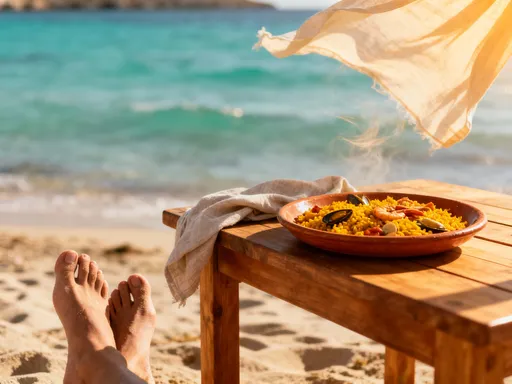
Lunch often means a shared paella cooked over an open fire at a beach bar. The rice, golden with saffron, is studded with shrimp, mussels, and squid, the socarrat—the crispy bottom layer—prized above all. The table is low, shaded by a striped parasol, surrounded by wicker chairs and bare feet. The colors are soft but distinct: white linen, terracotta plates, the deep blue of the Mediterranean. To photograph this scene is to capture a mood as much as a meal. A wide shot shows the dunes, the sea, the scattered tables—context is everything. A close-up reveals the texture of the rice, the glint of moisture on a mussel shell, the steam rising into the warm air.
Sunset in Formentera is not just a daily event—it is a ritual. As the sky turns peach and lavender, diners linger over glasses of local vermouth, olives, and slices of cured ham. The light is soft, golden, perfect for photography. A hand lifts a glass, catching the last rays; a child runs toward the water, laughter in the air. These are the moments that define the island—not grand gestures, but small, shared joys. The photographer’s role is not to interrupt but to witness, to frame without intruding.
What makes Formentera so compelling is its authenticity. There are no staged backdrops, no influencer-friendly setups. The beauty is in the real—the uneven table, the wind-blown hair, the slightly overcooked rice. These imperfections are not flaws; they are proof of life. And in a world where so much is curated, that authenticity is rare, precious, and deeply photogenic.
Shooting with Respect: Ethics in Food Photography
As food photography becomes more popular, so does the need for ethical awareness. Capturing a meal is not just about getting the perfect shot—it’s about honoring the people, places, and traditions behind it. In the Balearics, where dining is often a communal, familial affair, respect is paramount. Always ask before photographing people, especially in private kitchens or family-run taverns. A simple smile and gesture can go a long way. If the answer is no, accept it gracefully. Some moments are meant to be lived, not recorded.
Avoid disrupting service for a photo. Don’t rearrange dishes, move cutlery, or ask staff to delay serving just to get a better angle. These actions may seem minor, but they can break the flow of a restaurant’s rhythm and disrespect the work of those who prepare and serve the food. The most authentic images often come from patience—waiting for the right light, the right moment, the natural arrangement of a table after a toast has been made.
Remember: the meal is for eating first, sharing second, photographing third. A well-timed photo enhances the memory; an intrusive one spoils it. In village kitchens, where recipes are guarded family secrets, be mindful of what you share online. Avoid geotagging private homes or small family restaurants unless you have permission. The goal is not to turn every meal into content, but to preserve personal memories with dignity and care.
Finally, consider the impact of your presence. In fragile ecosystems like Formentera’s dunes or Menorca’s coves, leave no trace. Respect local customs, support family-run businesses, and let your photography reflect gratitude, not entitlement. When done with intention and humility, food photography becomes a form of storytelling that honors both the subject and the viewer.
More Than a Meal—A Memory in Every Frame
The Balearic Islands taught me that food is more than sustenance—it is culture, memory, and connection. Each island offers a distinct rhythm: Mallorca’s rustic depth, Ibiza’s bohemian flair, Menorca’s quiet elegance, Formentera’s barefoot grace. And through the lens, these differences come into focus not just as flavors, but as visual languages. A dish is never just a dish; it is light, texture, history, and place.
When you photograph what you eat, you are not merely documenting a meal—you are preserving a moment of presence. You are capturing the way the sun hits a plate of grilled fish, the way laughter rises around a shared paella, the way a grandmother’s hands shape dough with quiet mastery. These images become heirlooms, not just of travel, but of feeling.
So the next time you travel, let your appetite guide your lens. Seek out the village kitchen, the seaside grill, the family table. Eat slowly. Look closely. Frame with care. Because in the end, the most powerful travel photos are not the ones that look perfect—they are the ones that make you remember how it felt to be there, to taste, to belong. Pack your lens, bring your curiosity, and let the Balearics feed your eyes first.