Where Culture Meets Concrete: Dakar’s Architectural Soul Uncovered
You know that feeling when a city’s skyline tells a story before you even step inside? That’s Dakar. I didn’t expect brick and mortar to speak so loudly, but here, every building whispers history—colonial echoes, African pride, French curves meeting Wolof spirit. It’s not just about looks; it’s identity carved in concrete. From pastel seafront villas to bold modernist blocks, Dakar’s architecture is a living journal. Let’s walk through its streets and decode the soul behind the structures.
First Impressions: Dakar’s Skyline and Urban Vibe
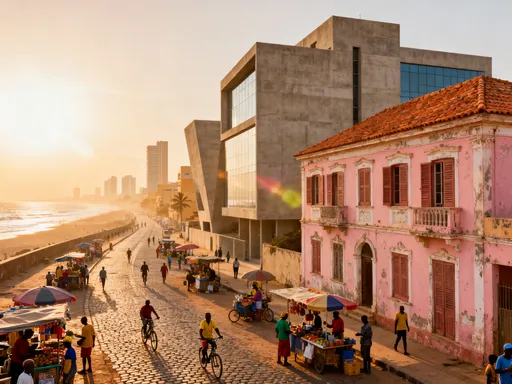
Dakar rises from the Atlantic coast like a mural painted in gradients of ochre, sky blue, and sun-bleached white. The city unfolds across a series of rolling hills and narrow peninsulas, its urban fabric shaped as much by geography as by history. As one approaches from the sea or descends from Blaise Diagne International Airport, the first glimpse of Dakar’s skyline reveals a dynamic mix: low-rise colonial buildings nestled beside glass-fronted towers, corrugated rooftops hugging hillsides, and the occasional dome or minaret piercing the horizon. This visual rhythm—neither entirely orderly nor chaotic—captures the spirit of a city in constant conversation with its past while reaching toward the future.
The city’s coastal positioning has long influenced its architectural character. Sea breezes dictate window placement; high humidity demands breathable materials; and the intense West African sun shapes overhangs and verandas. Dakar’s layout follows a radial pattern, with the historic Plateau district at its core, where government offices, banks, and older European-style buildings cluster. From there, neighborhoods fan outward—Medina to the north, Fann and Almadies along the southern coast—each with its own architectural tone. The urban vibe is one of layered density: vibrant, crowded, and alive, where every structure, no matter how modest, contributes to the city’s collective expression.
What strikes visitors immediately is the coexistence of architectural eras. French colonial buildings from the 19th and early 20th centuries stand shoulder-to-shoulder with post-independence modernist projects and contemporary high-rises. This blend isn’t always seamless, but it reflects Dakar’s evolution from colonial outpost to capital of an independent nation. The city does not erase its past; it layers it. Graffiti-covered colonial walls sit beside freshly painted apartment blocks. Open-air markets spill into streets lined with shuttered colonial homes. This architectural dialogue—between preservation and progress—gives Dakar its distinctive energy, a pulse that resonates in the way people live, move, and gather within its built spaces.
Colonial Foundations: French-Era Architecture
The roots of Dakar’s architectural identity are deeply embedded in the French colonial period, which began in earnest in the mid-19th century when the city became the administrative heart of French West Africa. During this era, the French imposed a formal urban plan on the city, introducing wide boulevards, public squares, and a grid-like structure in the Plateau district. The buildings constructed during this time were designed to reflect European ideals of order, elegance, and permanence. They were meant to impress, to assert dominance, and to create a sense of familiarity for colonial administrators far from home.
These colonial structures are easily recognized by their signature features: soft pastel-colored facades in shades of mint green, salmon pink, and butter yellow; wooden shuttered windows that allow airflow while offering privacy; wraparound balconies supported by slender iron railings; and red-tiled roofs that slope gently to shed tropical rains. Many of these buildings also include high ceilings and thick walls, designed to keep interiors cool in the oppressive heat. The architecture was functional but also symbolic—a visual statement of French presence and cultural superiority. Examples can still be seen throughout the Plateau, particularly along Avenue Abdoulaye Wade and Rue Lamine Guèye, where government ministries and former administrative offices occupy these historic shells.
Today, many of these colonial buildings remain in use, though their purposes have shifted. Some have been repurposed as museums, cultural centers, or private businesses. Others house government departments, continuing their role as centers of authority but now serving a Senegalese-led administration. In neighborhoods like Colobane and Ancienne Ville, preservation efforts have been modest but meaningful. Local architects and heritage advocates have worked to restore facades, repair structural damage, and prevent demolition in favor of new construction. These efforts are not just about aesthetics—they are acts of historical reclamation, acknowledging the colonial past without glorifying it, and transforming these spaces into platforms for national identity.
African Identity in Design: Post-Independence Architectural Expression
When Senegal gained independence in 1960, a new chapter in architectural expression began. No longer bound by colonial design principles, Senegalese architects and planners sought to create a built environment that reflected the nation’s cultural awakening. This shift was not merely stylistic; it was ideological. Architecture became a tool for asserting sovereignty, celebrating African heritage, and fostering a sense of unity among diverse ethnic groups. The result was a wave of public buildings, cultural institutions, and housing projects that incorporated local materials, traditional motifs, and indigenous spatial concepts.
One of the most notable examples of this post-independence architectural movement is the Palais de la République, completed in the 1960s. While it retains some formal elements of European neoclassicism, its design integrates African symbolism through the use of bold geometric patterns, open courtyards, and expansive shaded areas that encourage public gathering. The building’s grand colonnade and symmetrical layout convey dignity and strength, while its interior spaces are designed to accommodate both ceremonial functions and everyday governance. It stands as a physical manifestation of a young nation’s ambition and self-confidence.
Another landmark is the IFAN Museum of African Arts, now known as the Musée Théodore Monod. Designed with input from Senegalese intellectuals and artists, the museum’s architecture blends modernist lines with traditional West African design. Thick earthen walls, inward-facing layouts, and the use of laterite stone—a material commonly found in the region—anchor the building in its environment. The interior courtyards, shaded by mango trees, create a serene atmosphere conducive to reflection and learning. These design choices were deliberate, emphasizing continuity with African traditions rather than a break from them.
Beyond public institutions, residential architecture also evolved. In neighborhoods like Fann Point E and Liberté, architects experimented with courtyard homes, elevated living spaces, and natural ventilation systems inspired by rural Wolof and Serer dwellings. These homes often featured hand-carved wooden doors, decorative metal grilles, and vibrant color palettes drawn from local textiles. The goal was not to replicate village architecture, but to reinterpret it for urban life—creating spaces that felt authentically Senegalese while meeting the needs of modern families.
Religious Architecture: Mosques and Spiritual Spaces
Islam plays a central role in Senegalese society, and its influence is deeply visible in Dakar’s architectural landscape. With over 95% of the population identifying as Muslim, mosques are not only places of worship but also community hubs, educational centers, and symbols of cultural identity. Their presence shapes the city’s skyline, with minarets rising above neighborhoods and domes catching the golden light of dawn and dusk. The design of these religious structures reflects both spiritual values and regional aesthetics, blending North African influences with West African craftsmanship.
The Grand Mosque of Dakar, located near the Corniche Ouest, is one of the city’s most iconic spiritual landmarks. Though smaller than some of the continent’s grandest mosques, its elegance lies in its harmony with the surroundings. Constructed with pale stone and adorned with intricate geometric tilework, the mosque features a central dome flanked by two slender minarets. The courtyard, paved in cool stone, is shaded by tall palms and surrounded by arched walkways that invite quiet contemplation. Inside, the prayer hall is kept deliberately simple—no figurative art, in accordance with Islamic tradition—but the play of light through stained glass and the acoustics of recited Quranic verses create a deeply meditative atmosphere.
What makes religious architecture in Dakar particularly distinctive is the integration of local artisanship. Unlike mass-produced mosques seen in other parts of the world, many of Dakar’s places of worship are handcrafted by Senegalese masons, carpenters, and tile makers. Decorative elements often include hand-painted calligraphy, carved wood beams, and wrought iron grilles featuring Islamic geometric patterns. These details are not merely ornamental; they represent a fusion of faith and cultural pride. The use of locally sourced materials—such as laterite and coral stone—also ensures that these buildings belong to their environment, both visually and spiritually.
Beyond the Grand Mosque, smaller neighborhood mosques dot the city, each with its own character. In Médina, one of Dakar’s oldest and most densely populated areas, mosques are often tucked between homes, their minarets rising just above the rooftops. These modest structures serve as daily gathering points, where residents come not only to pray but also to discuss community matters, celebrate festivals, and support one another. Their architecture may be simple, but their social function is profound—anchoring spiritual life in the rhythm of everyday existence.
Modern & Contemporary Trends: Urban Growth and Innovation
As Dakar’s population has grown—from around 500,000 in the 1970s to over 3 million today—the demand for housing, offices, and infrastructure has driven rapid urban expansion. This growth has given rise to a new generation of buildings that reflect both global trends and local adaptations. High-rise apartment complexes, shopping centers, and government buildings now define parts of the city’s skyline, particularly in emerging districts like Diamniadio and Parcelles Assainies. These developments signal Dakar’s aspirations as a modern African capital, capable of competing on continental and international stages.
Contemporary architecture in Dakar often draws from international styles—glass curtain walls, steel frames, minimalist facades—but with modifications to suit the climate and culture. For instance, many new buildings incorporate deep overhangs, shaded balconies, and reflective materials to reduce solar heat gain. Some architects are experimenting with passive cooling techniques, such as cross-ventilation and thermal mass, to minimize reliance on air conditioning. Others are integrating green spaces into developments, recognizing the psychological and environmental benefits of urban vegetation.
One of the most ambitious recent projects is the Dakar Arena, a 23,000-seat indoor stadium completed in 2018. Designed with input from Senegalese engineers and international consultants, the arena features a sleek, futuristic exterior with a curved roof that evokes the shape of a traditional Wolof drum. Inside, the acoustics and seating layout were optimized for both sports and cultural events, reflecting Dakar’s dual identity as a city of athleticism and artistic expression. The arena has hosted major concerts, basketball tournaments, and political gatherings, becoming a symbol of national pride and modern capability.
Yet, this rapid development is not without challenges. Unplanned urban sprawl, traffic congestion, and pressure on water and electricity systems threaten the city’s sustainability. Some new buildings prioritize aesthetics over functionality, resulting in poorly ventilated interiors or inadequate access to natural light. There is also concern that the push for modernization may come at the expense of heritage preservation. In response, a growing number of architects and urban planners are advocating for smarter, more thoughtful development—ones that balance innovation with environmental responsibility and cultural continuity.
Everyday Architecture: Homes, Markets, and Street Life
Beyond monuments and government buildings, the true soul of Dakar’s architecture lies in its everyday spaces. The city’s residential neighborhoods—each with its own rhythm and character—offer a rich tapestry of domestic life shaped by climate, economy, and community. In Fann and Almadies, tree-lined streets are lined with single-family homes featuring pastel walls, iron grilles, and lush gardens. These homes often have rooftop terraces where families gather in the evenings to escape the heat, sip mint tea, and watch the sunset over the ocean. The design prioritizes privacy and comfort, with enclosed courtyards and shaded entrances.
In contrast, the neighborhood of Médina presents a denser, more communal form of living. Here, multi-family compound houses—known locally as “cités”—dominate the landscape. These structures are typically two or three stories high, built around a central courtyard where children play, women cook, and neighbors socialize. The facades are often brightly painted, with hand-decorated metal gates and flower pots lining window sills. Rooftops serve as additional living spaces, used for drying clothes, growing herbs, or hosting small gatherings. Despite limited space, residents find creative ways to personalize their environments, turning functional buildings into expressions of identity and belonging.
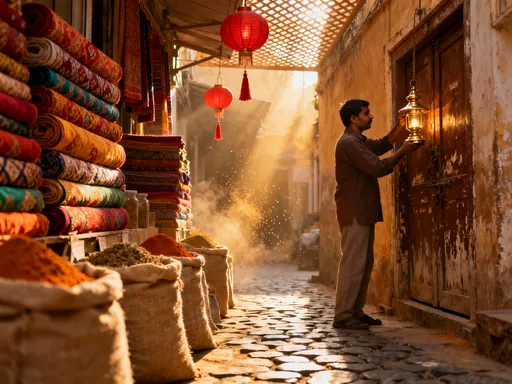
Markets are another vital component of Dakar’s architectural ecosystem. From the bustling Sandaga Market to the artisan stalls of HLM, these informal commercial spaces are not housed in formal buildings but emerge organically from the urban fabric. Vendors set up under corrugated metal canopies, repurposed shipping containers, or simple awnings stretched between poles. These structures are temporary by design, allowing flexibility and adaptability. Yet, they form a critical part of the city’s economic and social life, where goods are exchanged, news is shared, and community bonds are strengthened.
Street life in Dakar is inseparable from its architecture. Sidewalks double as social spaces, where friends chat on benches, children play football between parked cars, and artisans repair shoes or radios. Iron grilles, while functional for security, are often intricately designed, featuring floral patterns or symbolic shapes. Even utility poles and street signs become part of the visual language, layered with posters, advertisements, and hand-painted notices. This informal architecture—unplanned, adaptive, and deeply human—reveals how people shape their environment to meet their needs, creating a city that feels lived-in and loved.
Architecture as Cultural Dialogue: Past, Present, and Future
Dakar’s architecture is more than a collection of buildings; it is a continuous conversation between past and present, between foreign influence and local identity, between tradition and innovation. Each structure—whether a colonial villa, a neighborhood mosque, or a modern apartment block—carries a story about who built it, why it was needed, and how it has been used over time. To walk through Dakar is to read this layered narrative, to see how history is not erased but rewritten, adapted, and reinterpreted with each generation.
What makes this dialogue especially powerful is the growing awareness among Senegalese citizens about the value of their built heritage. Community-led initiatives, architectural tours, and preservation campaigns are gaining momentum, driven by a desire to protect what is uniquely Dakar. Young architects are blending traditional materials with sustainable technologies, creating homes that are both energy-efficient and culturally resonant. Universities and design schools are emphasizing context-sensitive architecture, teaching students to listen to the land, the climate, and the people before putting pencil to paper.
For travelers, understanding Dakar’s architecture deepens the experience of the city. It moves the journey beyond surface-level sightseeing into a more meaningful engagement with culture and history. Instead of merely photographing a colorful wall or a grand mosque, one begins to see the intention behind the design, the hands that built it, and the lives it has sheltered. This kind of awareness fosters respect, curiosity, and connection.
As Dakar continues to grow, the challenge will be to ensure that development does not come at the cost of identity. The city does not need to choose between modernity and tradition; it can embrace both. By honoring its architectural soul—through preservation, innovation, and community participation—Dakar can set an example for cities across Africa and beyond. Its buildings, after all, are not just shelters. They are storytellers. And their stories deserve to be heard.